Why Is NEPSE So Volatile? Understanding the Chaos of Nepal’s Stock Market !
NEPSE Labs
May 14, 2026
Introduction
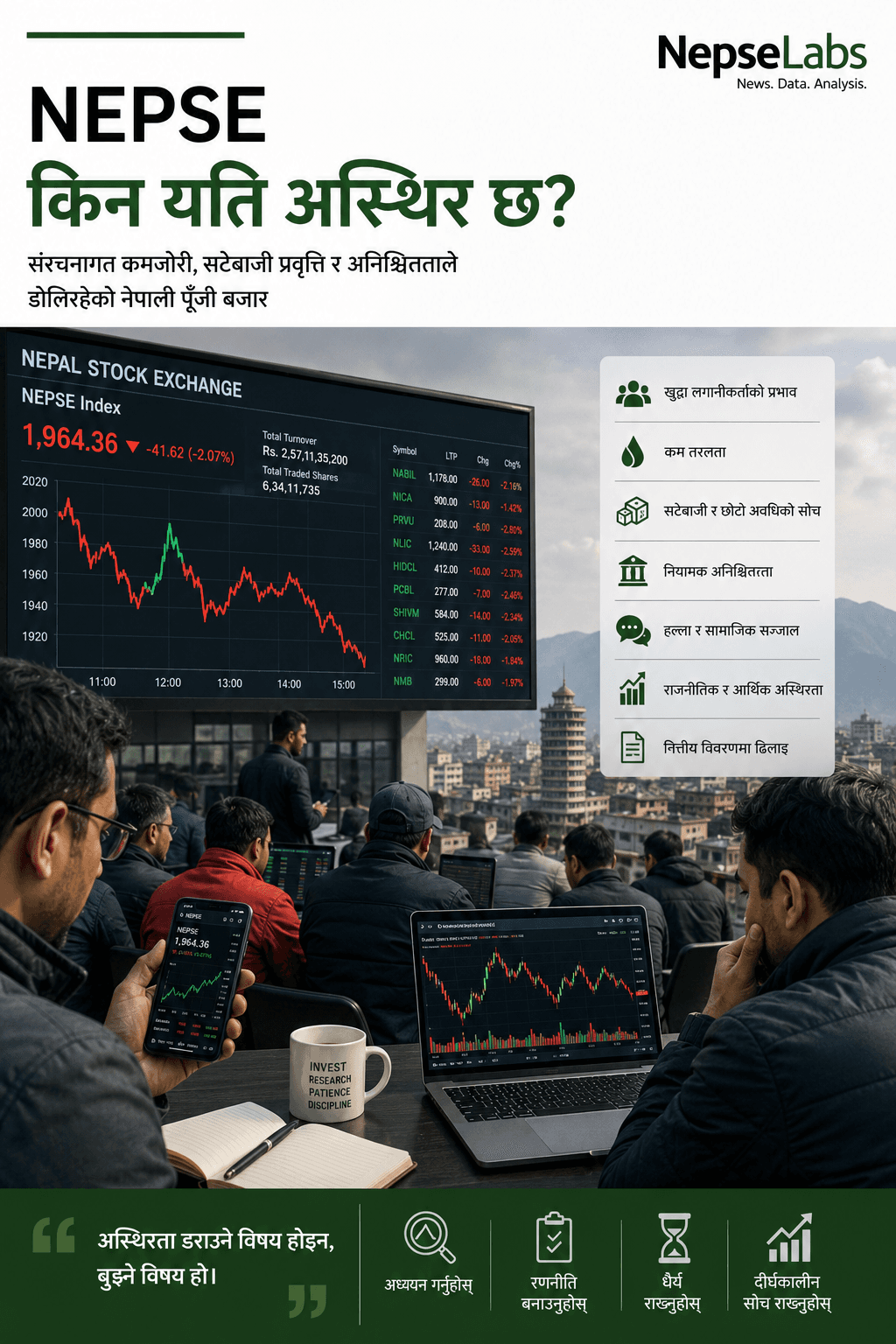
The Nepal Stock Exchange (NEPSE) is known for its wild swings—booming one month and plunging the next. For investors, especially beginners, these sharp fluctuations can be nerve-wracking. But volatility isn't just chaos; it's a reflection of deeper structural, behavioral, and economic issues. Let’s explore why NEPSE is so volatile and what it tells us about Nepal’s financial ecosystem.
1. Lack of Institutional Investors
Unlike mature markets dominated by mutual funds, pension funds, or large financial institutions, NEPSE is heavily retail-driven. Retail investors often make decisions based on rumors, hype, or social media chatter. This herd mentality leads to rapid price surges and panic selling—creating excessive volatility.
2. Low Liquidity
With relatively low daily trading volume, it doesn’t take much capital to move stock prices. A few large buy or sell orders can disproportionately impact prices, causing exaggerated movements in the index.
3. Speculation Over Fundamentals
A large portion of NEPSE’s trading is speculative. Instead of analyzing balance sheets or earnings reports, many investors chase short-term profits. This speculation fuels pump-and-dump behavior and increases volatility as prices disconnect from fundamental values.
4. Lack of Diversified Sectors
NEPSE is concentrated around a few sectors, mainly banking, insurance, and hydropower. When any one of these sectors faces regulatory issues or policy changes, it sends shockwaves throughout the entire index. A lack of sectoral balance makes the index more fragile.
5. Regulatory Delays and Unpredictability
SEBON (Securities Board of Nepal) and other regulatory bodies are still evolving. Sometimes, regulatory decisions— like changes in margin lending rules or capital gains tax enforcement—are abrupt or poorly communicated. This unpredictability causes fear, overreaction, and sharp market movements.
6. Rumors and Social Media Influence
In NEPSE, rumors can move markets faster than official news. Facebook groups, Telegram channels, and YouTube creators can sometimes cause buying frenzies or panic—even when there's no solid data behind it. This adds fuel to NEPSE’s volatility.
7. Political and Economic Instability
Political instability, changes in monetary policy by NRB (Nepal Rastra Bank), inflation, or economic shocks (like remittance drop or import bans) heavily impact investor sentiment. In a market already fragile, such events amplify volatility.
8. Delay in Financial Reporting and Disclosures
Many companies listed on NEPSE don’t maintain timely or transparent reporting practices. The lack of reliable data leads to uncertainty, which translates into speculation and erratic price behavior.
Conclusion
NEPSE’s volatility isn't just noise—it’s a signal of the structural gaps and emotional investing behaviors that dominate the market. For smart investors, understanding this volatility is key to building a strategy that doesn’t just survive NEPSE’s chaos but thrives in it. Whether you’re a swing trader or a long-term investor, awareness of these underlying issues can help you make smarter, more resilient financial decisions.
Related Blogs
Why NepseLabs ?

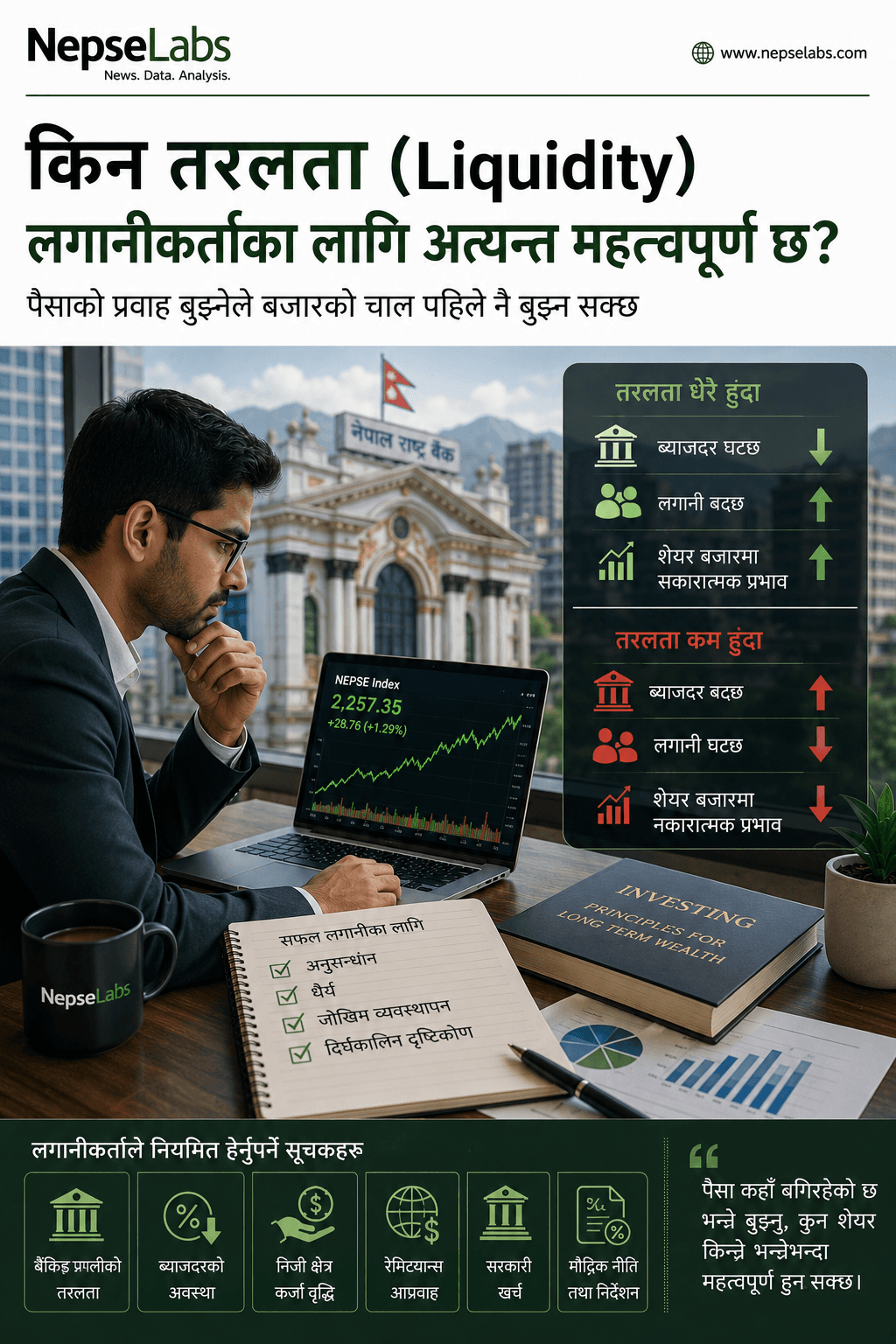
Why Liquidity Matters More Than Most Investors Think
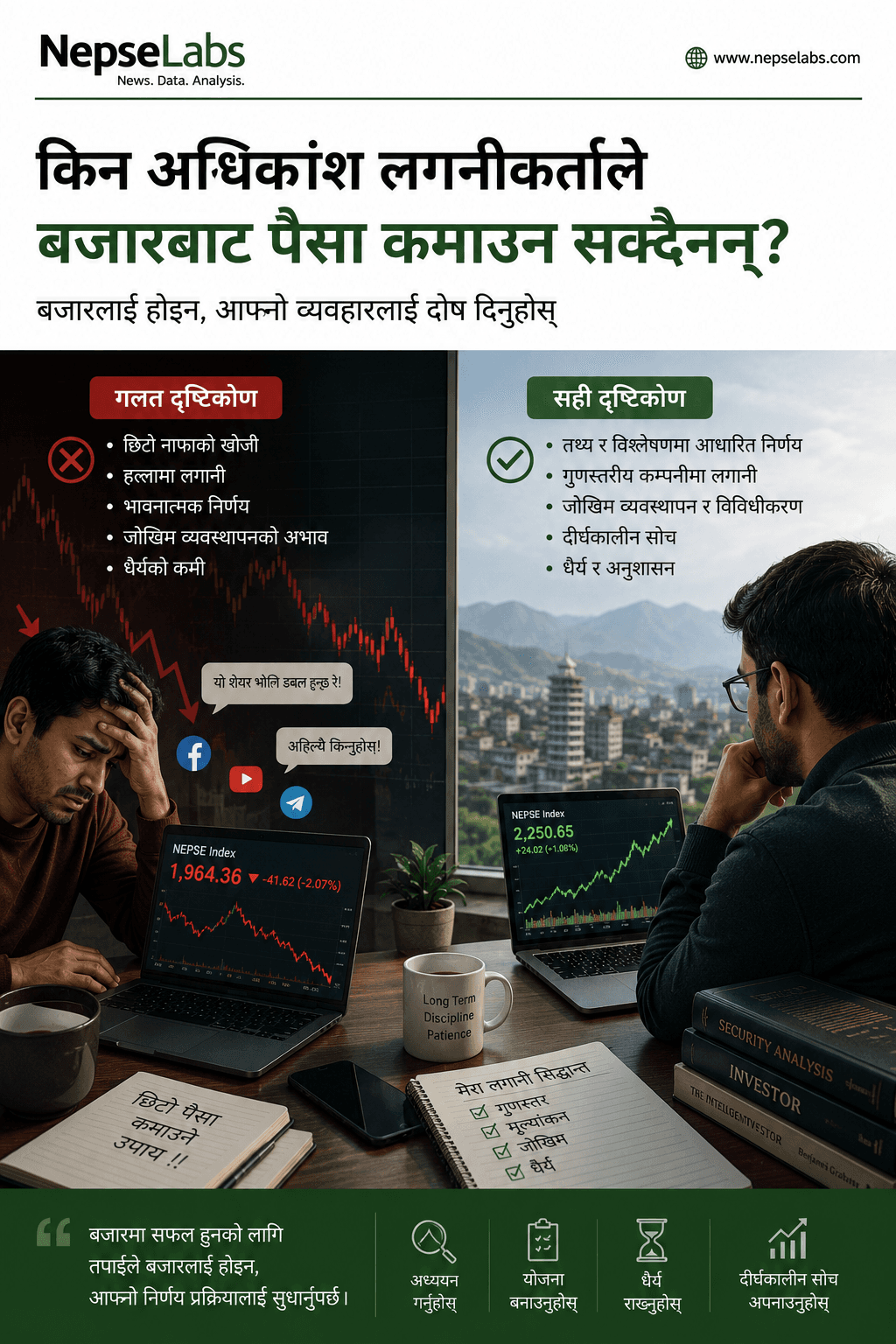
Why Most Investors Fail to Make Money in the Stock Market ?
Hydropower in Nepal: The Backbone of Nepal’s Economic Future
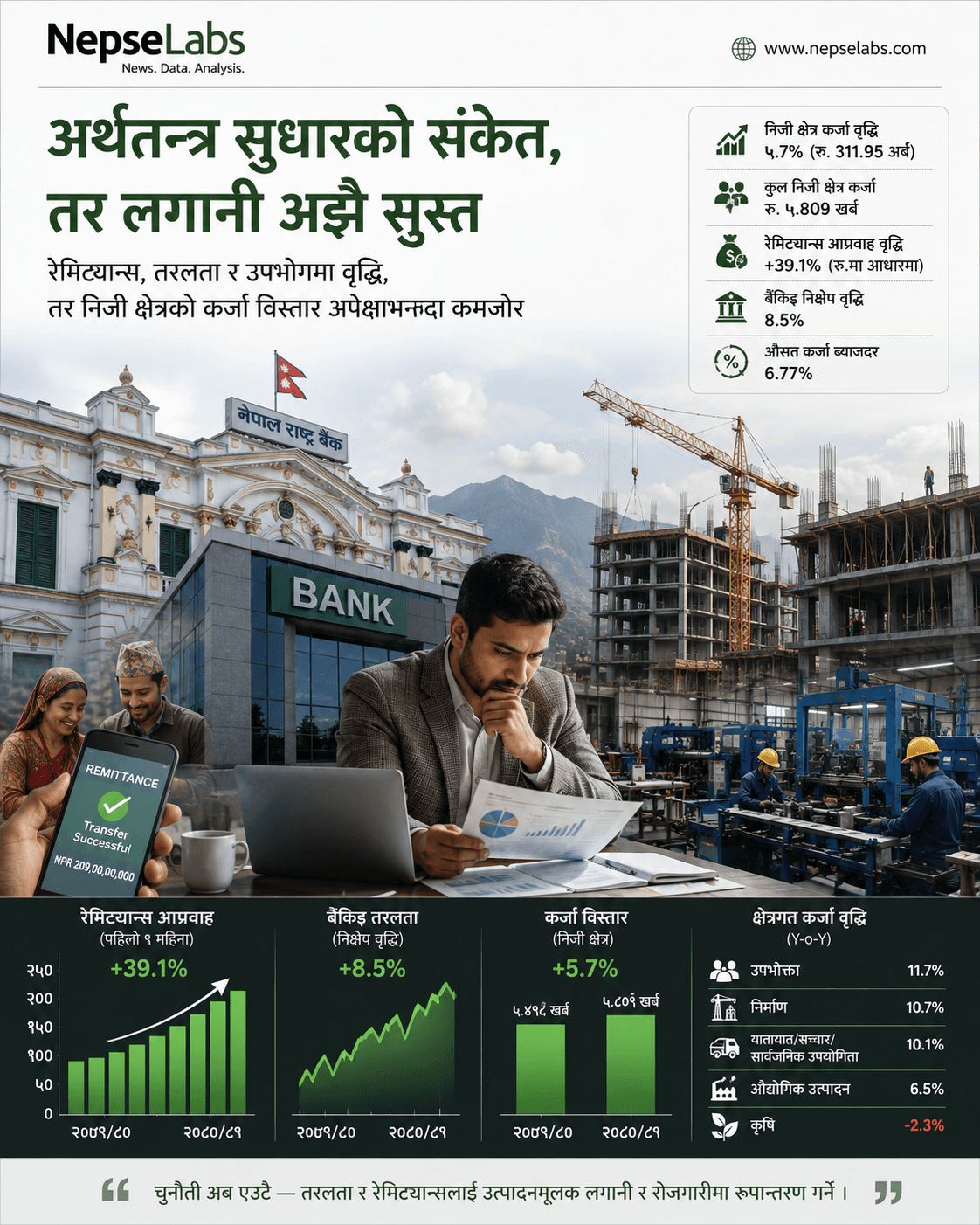
Signs of economic recovery, but investment still slow ?