Who Really Controls Nepal’s Economy? Politicians, Donors, or the Market?
NEPSE Labs
May 14, 2026
The Illusion of Economic Sovereignty
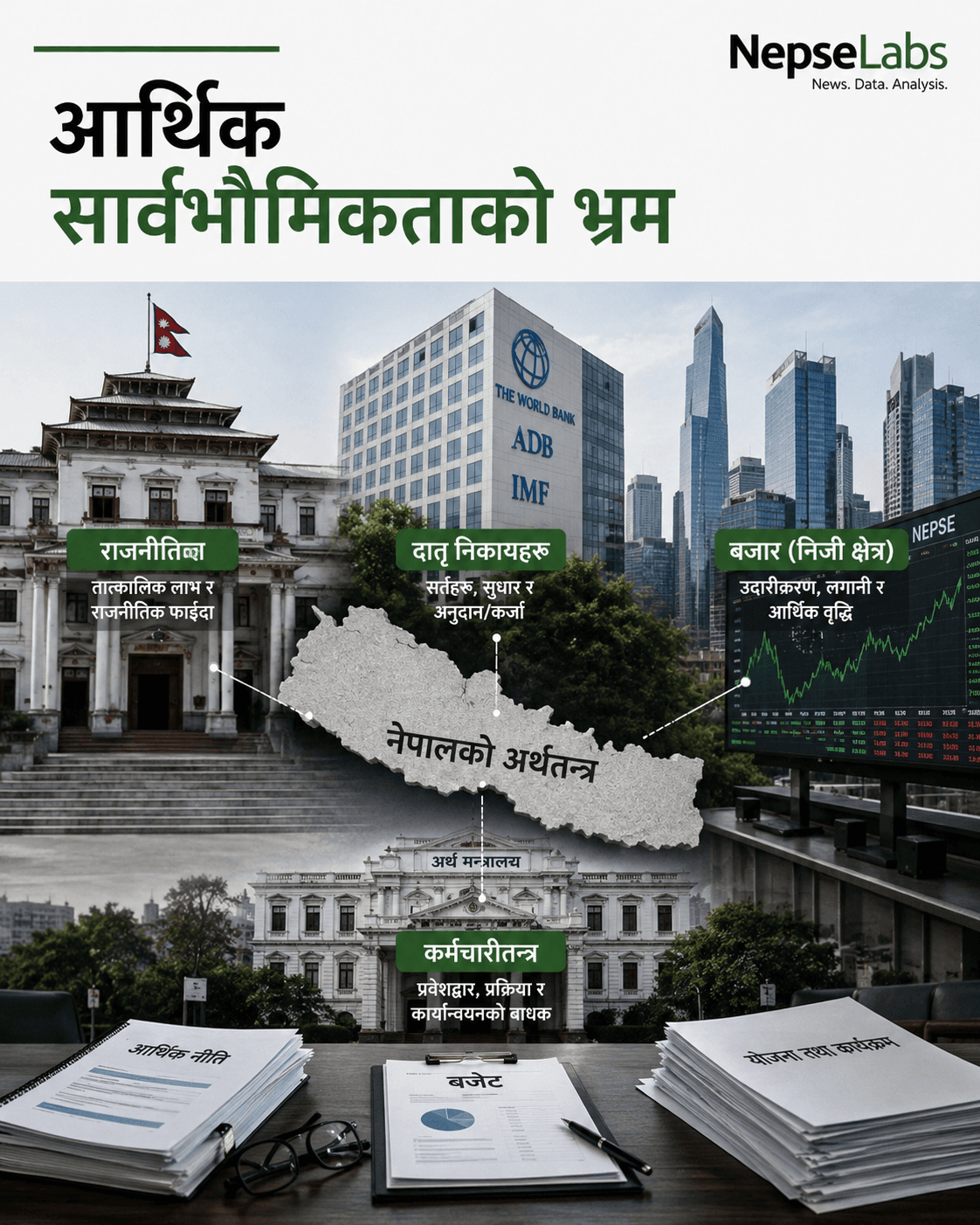
Nepal often speaks of “independent economic growth,” yet the control of its economy lies at the intersection of three powerful forces: politicians, foreign donors, and an emerging private market. Each has a grip on policy, resources, and public perception — but none hold full control.
1. Politicians: Powerful, But Short-Sighted
Successive governments in Nepal have failed to implement long-term economic strategies. Ministries are shuffled, budgets rewritten, and five-year plans quietly shelved after every regime change. Most economic policies are reactive — focused on subsidies, public hiring, and populist relief programs.
Politicians command fiscal tools, but their lack of technical expertise and continuity weakens Nepal's structural economic growth.
2. Donors: Silent Architects of Development
From the roads we drive on to the education reforms in schools, foreign donors shape a vast portion of Nepal’s development blueprint. Institutions like the World Bank, IMF, ADB, and bilateral agencies (like USAID, JICA) direct billions in grants and loans — tied to policy reforms and structural benchmarks.
Donor dependency has led to external influence over Nepal’s tax policy, banking regulation, and even budget priorities. In many ministries, donor consultants outweigh in-house expertise.
3. The Market: Rising, But Still Marginalized
Nepal’s private sector is becoming more assertive — from IT startups and fintech to manufacturing revival and capital markets. NEPSE is gaining depth. Tech exports are growing. Young entrepreneurs are building fast-moving businesses.
Yet, market-driven voices are often left out of economic planning rooms. Regulatory uncertainty, political favoritism, and bureaucratic hurdles limit the market’s true influence on national policy.
4. Bureaucracy: The Unseen Force
Behind the scenes, Nepal’s bureaucracy — particularly the Ministry of Finance and NRB — plays a quiet but decisive role. However, rigid hierarchies, slow implementation, and risk-averse behavior often block innovation and reforms. Bureaucrats hold technical knowledge but often lack executional autonomy.
Who Truly Holds the Strings?
The answer is: no single player. Nepal’s economy is a negotiation table where:
Politicians seek quick wins and political mileage
Donors demand compliance and reforms
Markets push for deregulation and growth
Bureaucrats act as gatekeepers and bottlenecks
The result? Fragmented policies, partial reforms, and slow execution.
What Needs to Change?
Nepal needs economic sovereignty by design — not slogans. That means:
Depoliticizing economic ministries
Negotiating smarter with donors (not blindly agreeing)
Involving private sector leaders in policymaking
Building long-term roadmaps immune to political cycles
Until that happens, Nepal’s economy will remain a vehicle with three drivers — moving, but with no direction.
⚖️ Control is nothing without direction. If you believe Nepal needs smarter economic leadership, share this article and spark the debate.
Related Blogs
Why NepseLabs ?

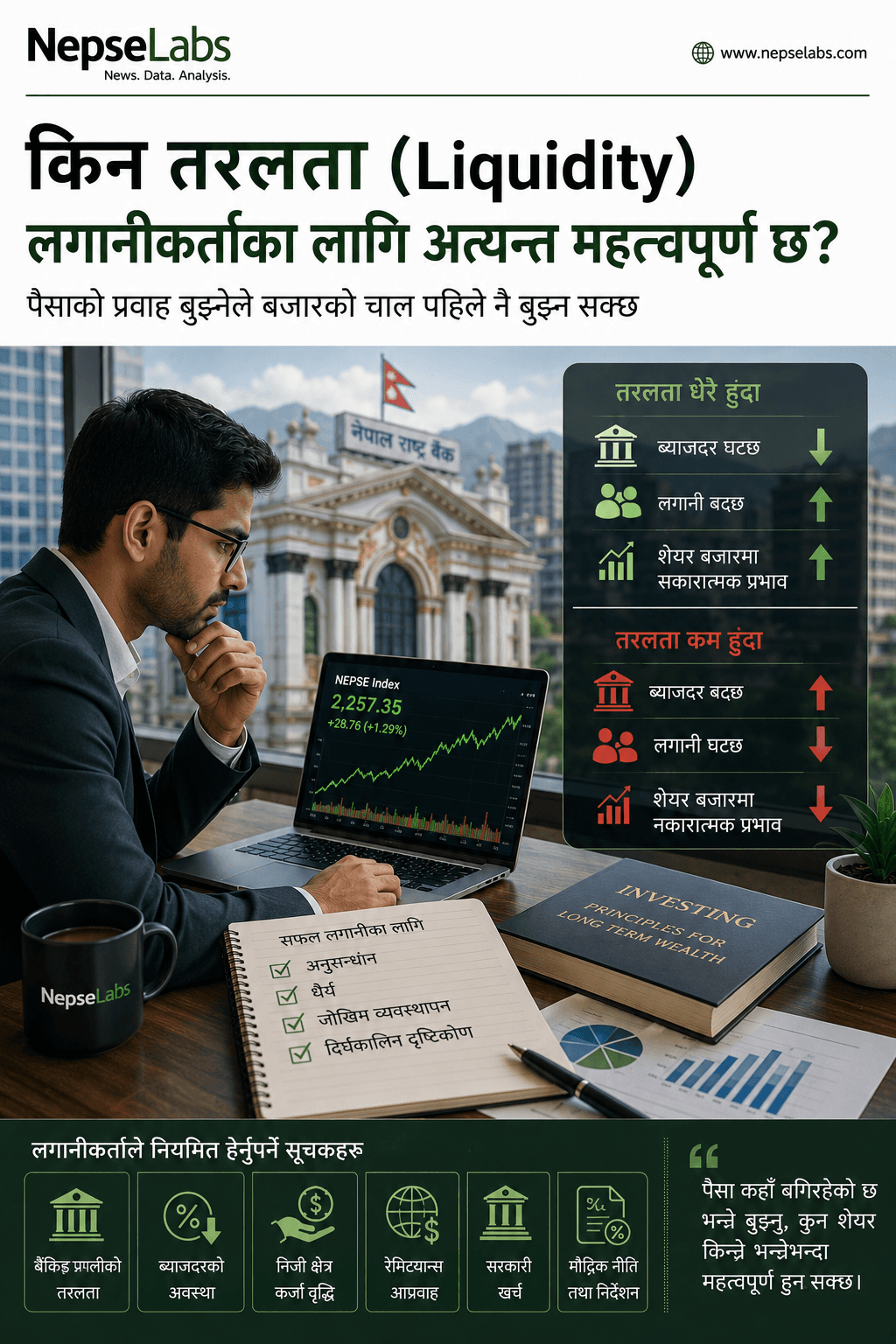
Why Liquidity Matters More Than Most Investors Think
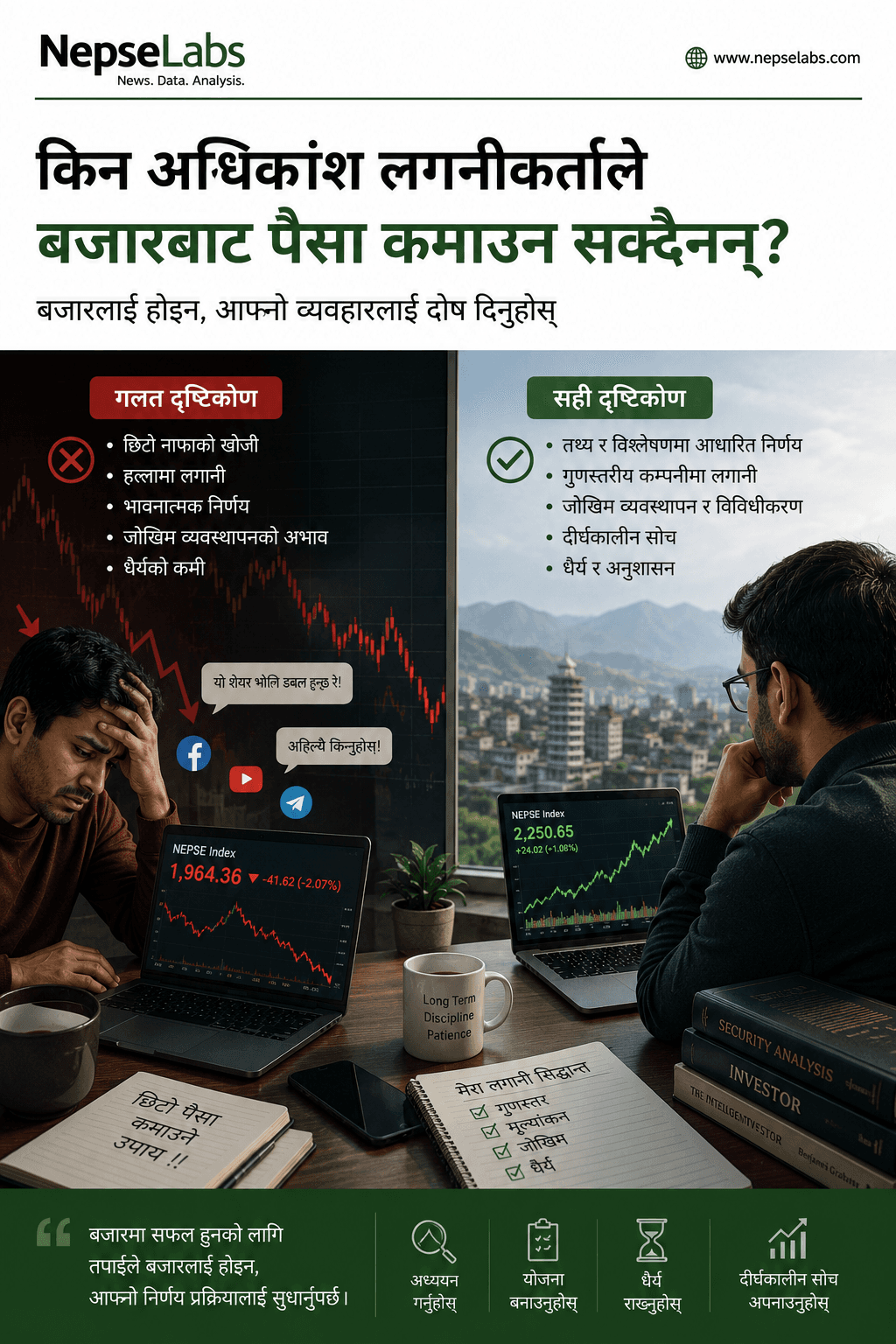
Why Most Investors Fail to Make Money in the Stock Market ?
Hydropower in Nepal: The Backbone of Nepal’s Economic Future
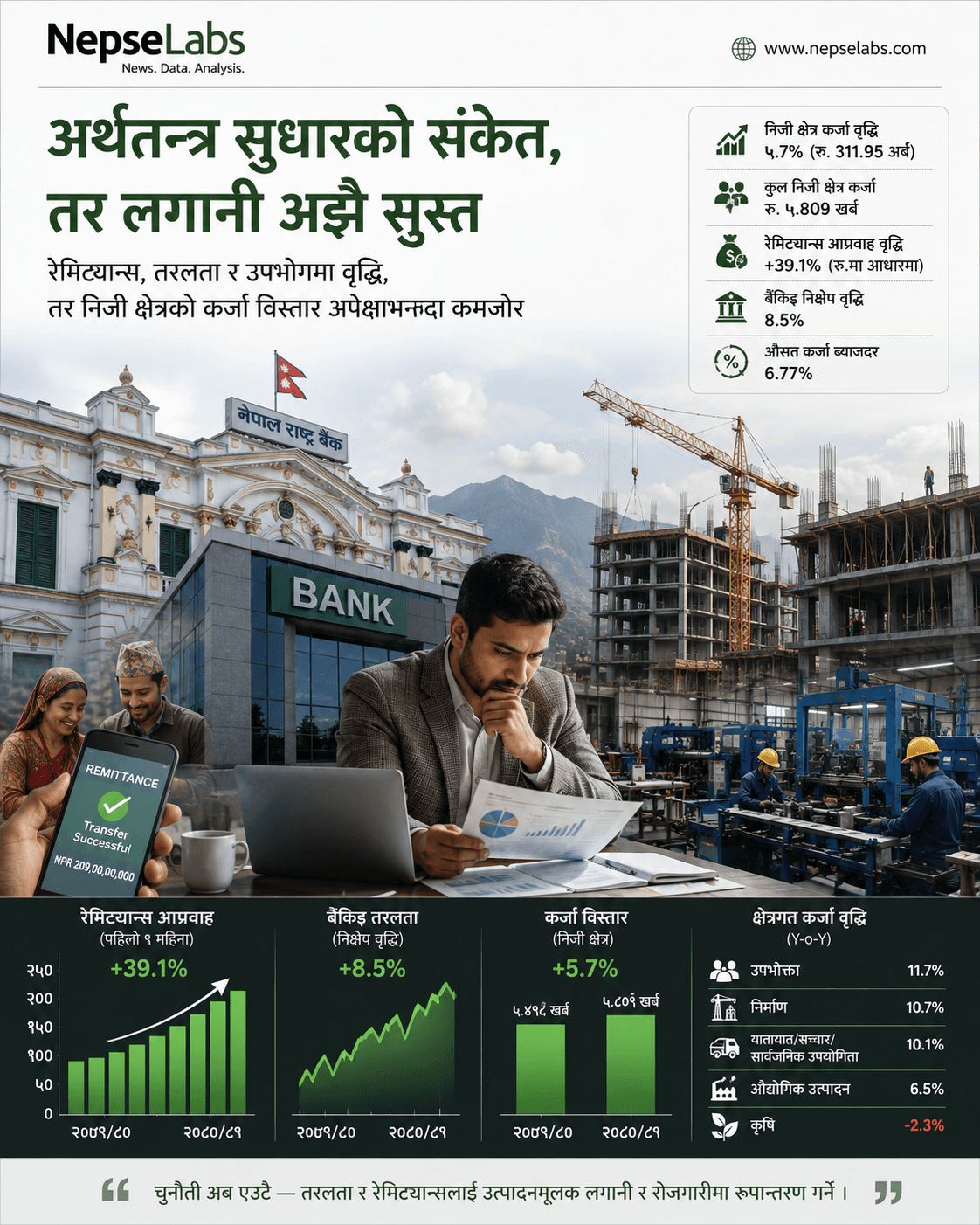
Signs of economic recovery, but investment still slow ?