Why the World Bank's Focus on Private Investment Matters for Nepal
World Bank Group
June 7, 2026
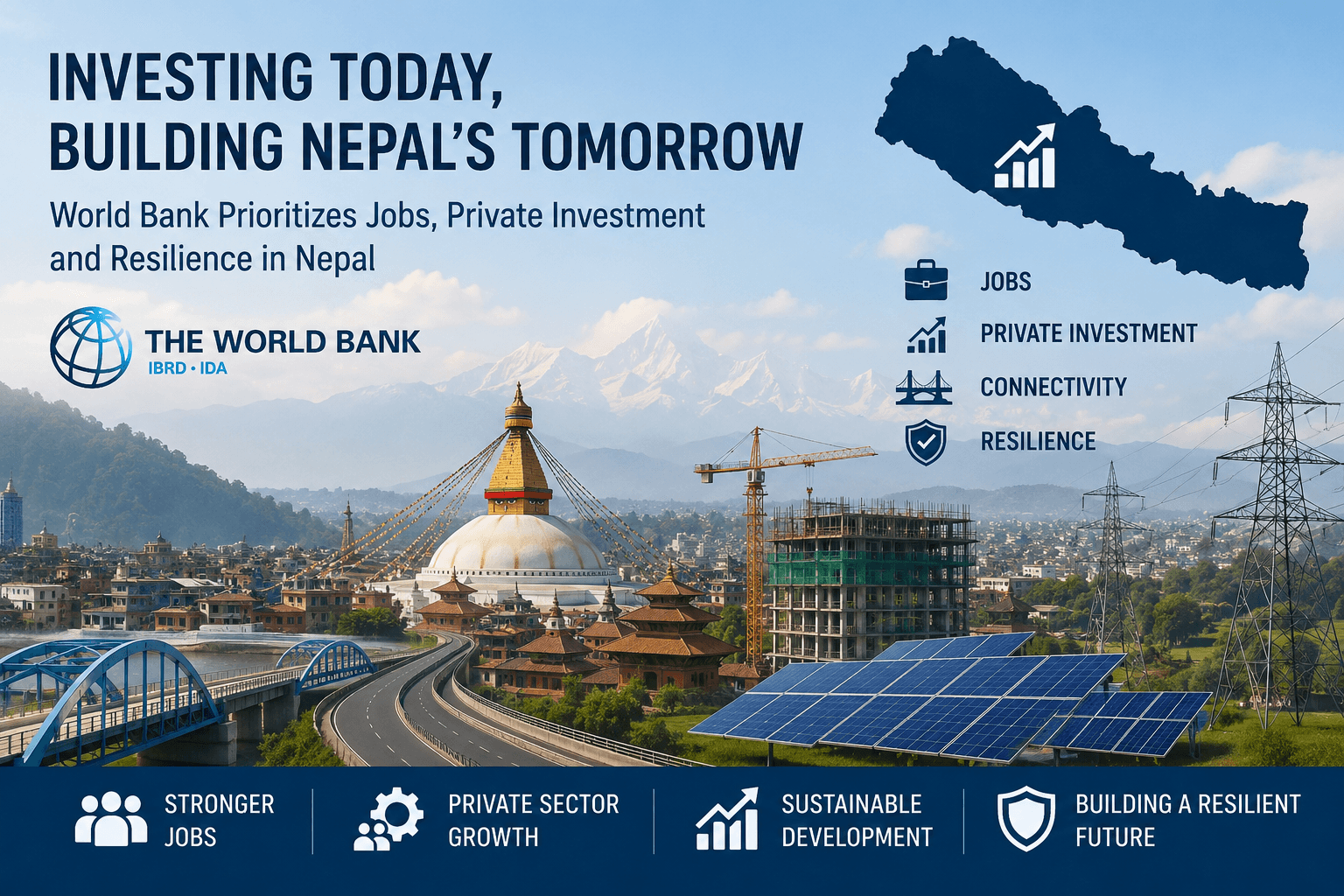
Nepal's economic development strategy is increasingly centered on attracting private investment, creating jobs, and strengthening economic resilience. International development partners, including the World Bank, have consistently highlighted these areas as critical for the country's long-term growth.
Private-sector investment plays an important role in expanding productive capacity, supporting entrepreneurship, and generating employment opportunities. For developing economies, investment in infrastructure, energy, transportation, and digital services can improve productivity and create conditions for sustainable economic growth.
Nepal has made progress in several areas over recent years, including financial inclusion, digital payments, and infrastructure development. However, challenges remain in attracting large-scale private capital and improving the ease of doing business.
For investors, policies that encourage investment and economic activity can have broad implications across multiple sectors. Banking institutions may benefit from increased lending activity, infrastructure companies could see stronger project pipelines, and capital markets may attract greater participation as economic opportunities expand.
NepseLabs Take
Long-term market growth is often linked to broader economic growth. Efforts to improve the investment climate, strengthen infrastructure, and support private-sector development could contribute to a more dynamic economy and a stronger capital market over time.
Related news
Why Hydropower Continues to Attract Investor Attention
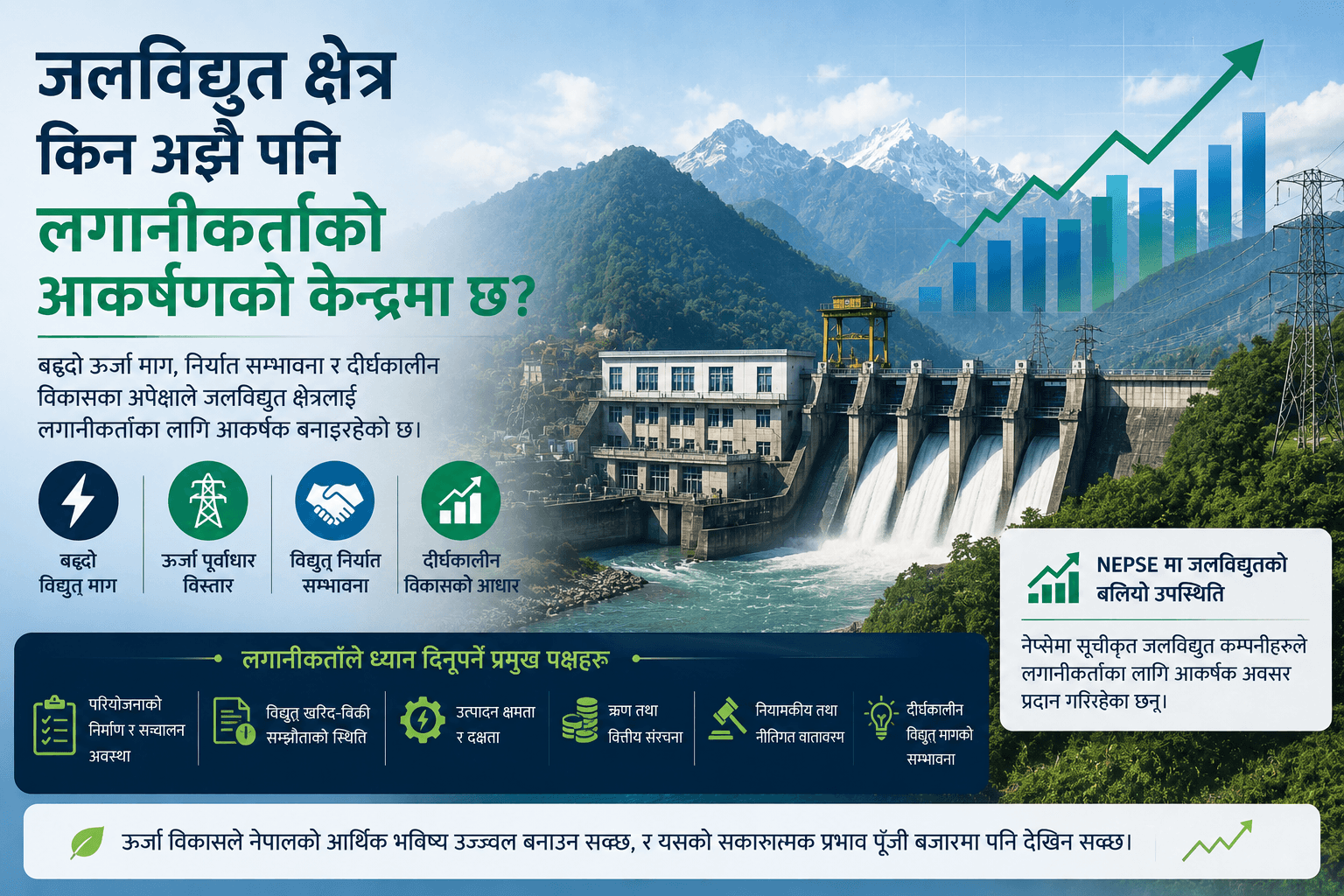
Hydropower is a dominant growth sector on NEPSE, offering retail investors accessible entry into infrastructure assets. Driven by robust domestic demand and cross-border export agreements with India and Bangladesh, the sector holds immense potential. However, long-term returns depend heavily on weather variability, execution timelines, and debt financing structures.
Why Banking Stocks Remain Central to Nepal's Stock Market
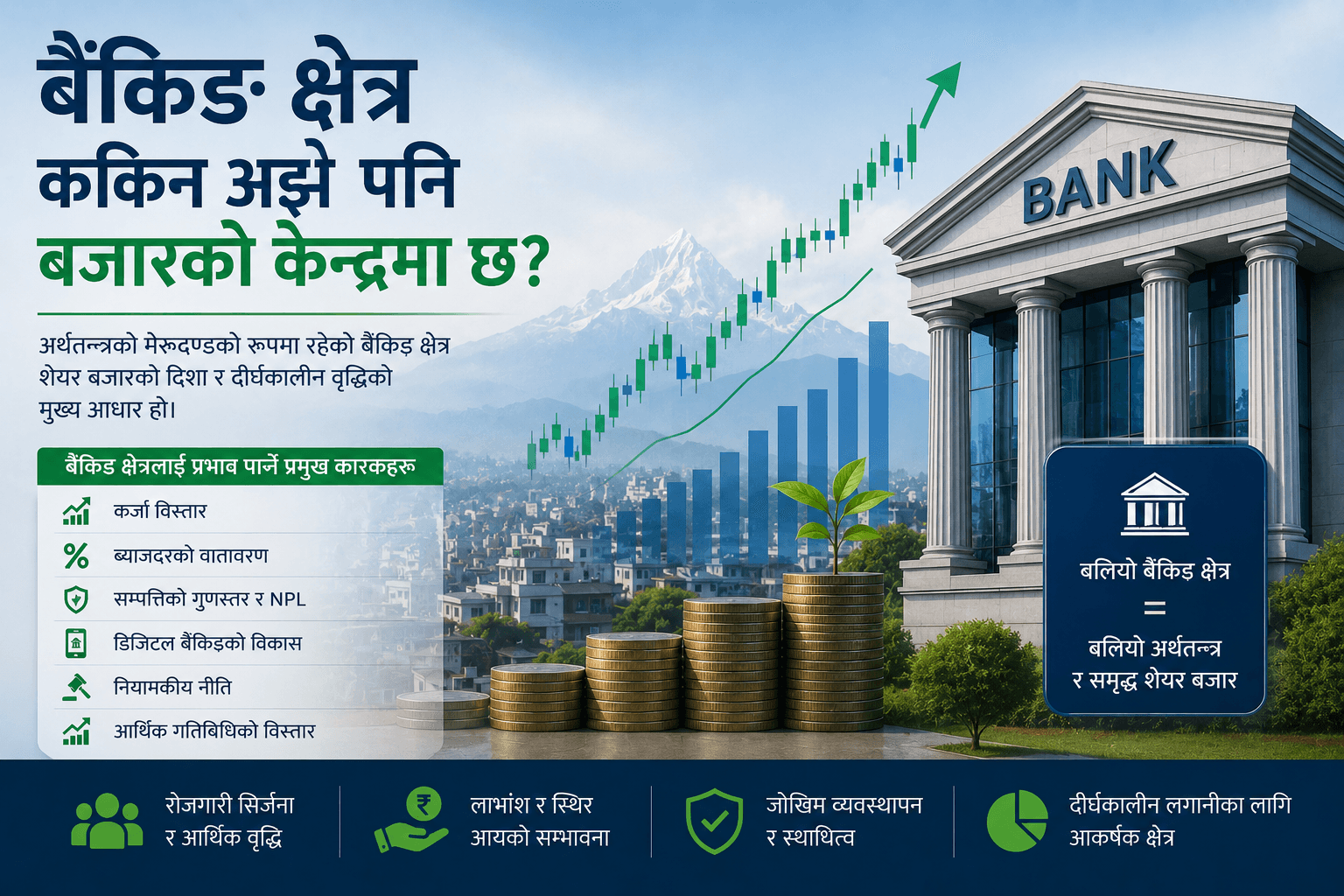
Commercial banks, a cornerstone of the Nepal Stock Exchange (NEPSE) with significant market capitalization, play a key role in economic credit delivery. Their performance is highly sensitive to interest rate changes, regulatory updates, and asset quality, making the monitoring of credit growth and non-performing loans essential for investors .
Can NEPSE Sustain Its Recent Momentum?
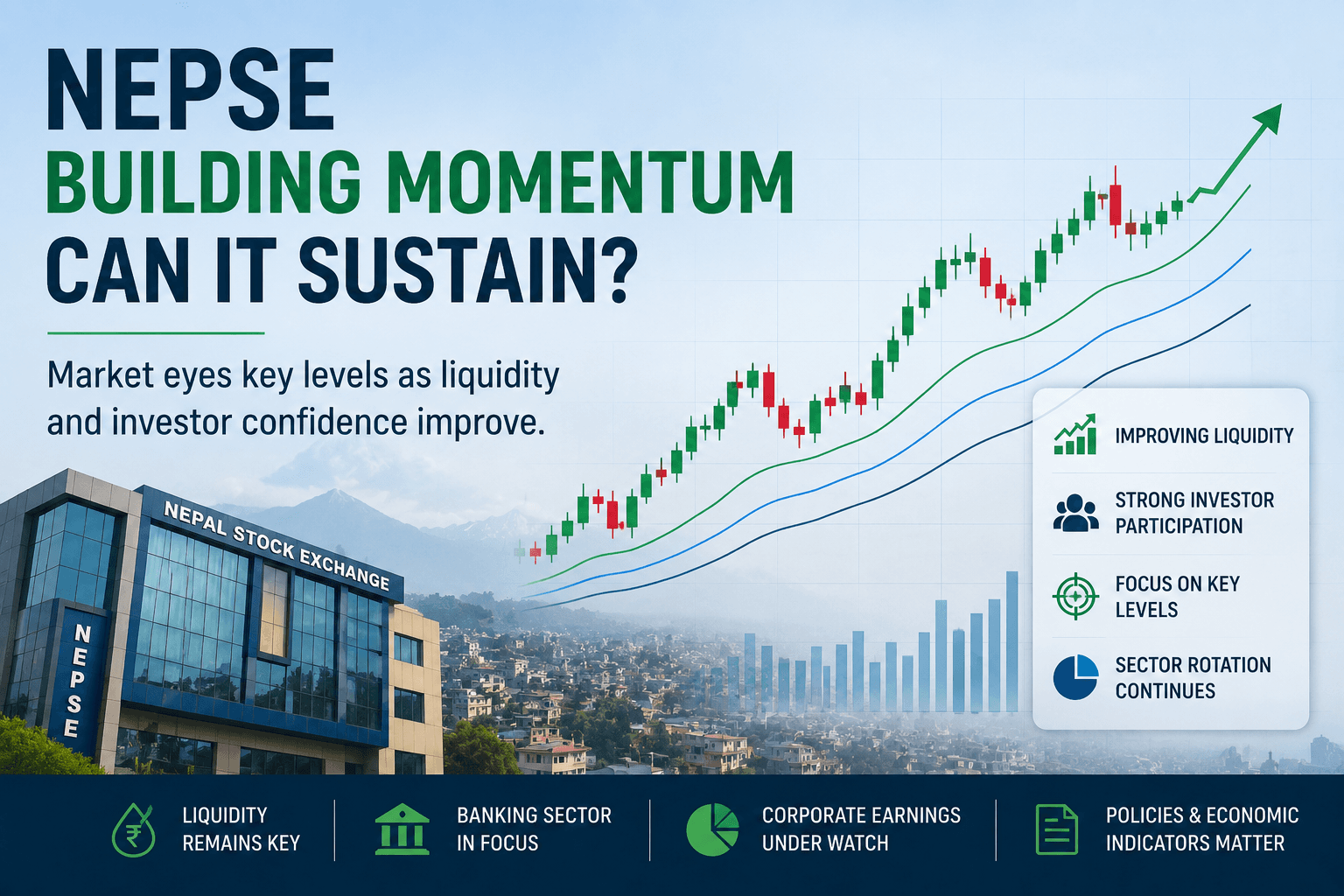
The NEPSE index is showing renewed momentum driven by improving investor sentiment and active trading across sectors. To maintain this trend, sustained liquidity, institutional confidence, and favorable regulatory shifts are essential. Investors must closely monitor interest rates, banking sector earnings, corporate announcements, and active sector rotations to gauge market direction.