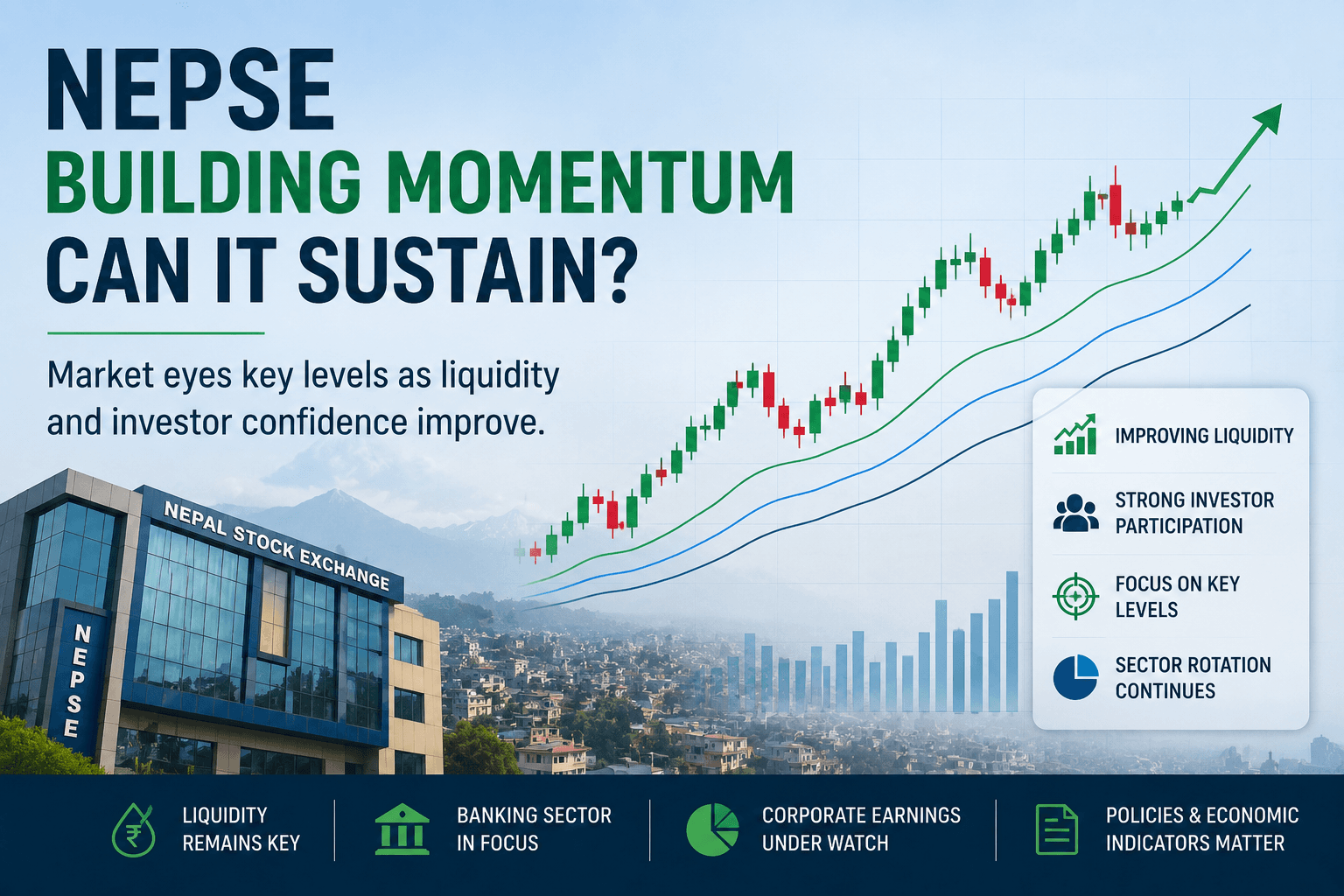
The Nepal Stock Exchange has experienced periods of renewed investor participation in recent months, supported by improving sentiment, active trading, and increased interest across several sectors.
Market participants are closely watching whether current momentum can translate into a more sustained trend. Historically, strong market advances have often been accompanied by improving liquidity, broader participation, and confidence in the economic outlook.
Investors continue to monitor several key factors, including interest rate trends, banking sector performance, corporate earnings, and regulatory developments. These factors can influence both investor sentiment and capital flows into the stock market.
While short-term market movements can be difficult to predict, periods of increased activity often encourage greater retail participation and renewed interest in listed companies.
What Investors Should Watch
Liquidity and daily market participation
Banking sector performance
Corporate earnings announcements
Economic and monetary policy developments
Sector rotation across banking, hydropower, insurance, and finance companies
NepseLabs Take
Market momentum alone is not enough to sustain a long-term bull market. Investors should focus on fundamentals, earnings quality, and broader economic conditions rather than relying solely on short-term price movements.
Related news
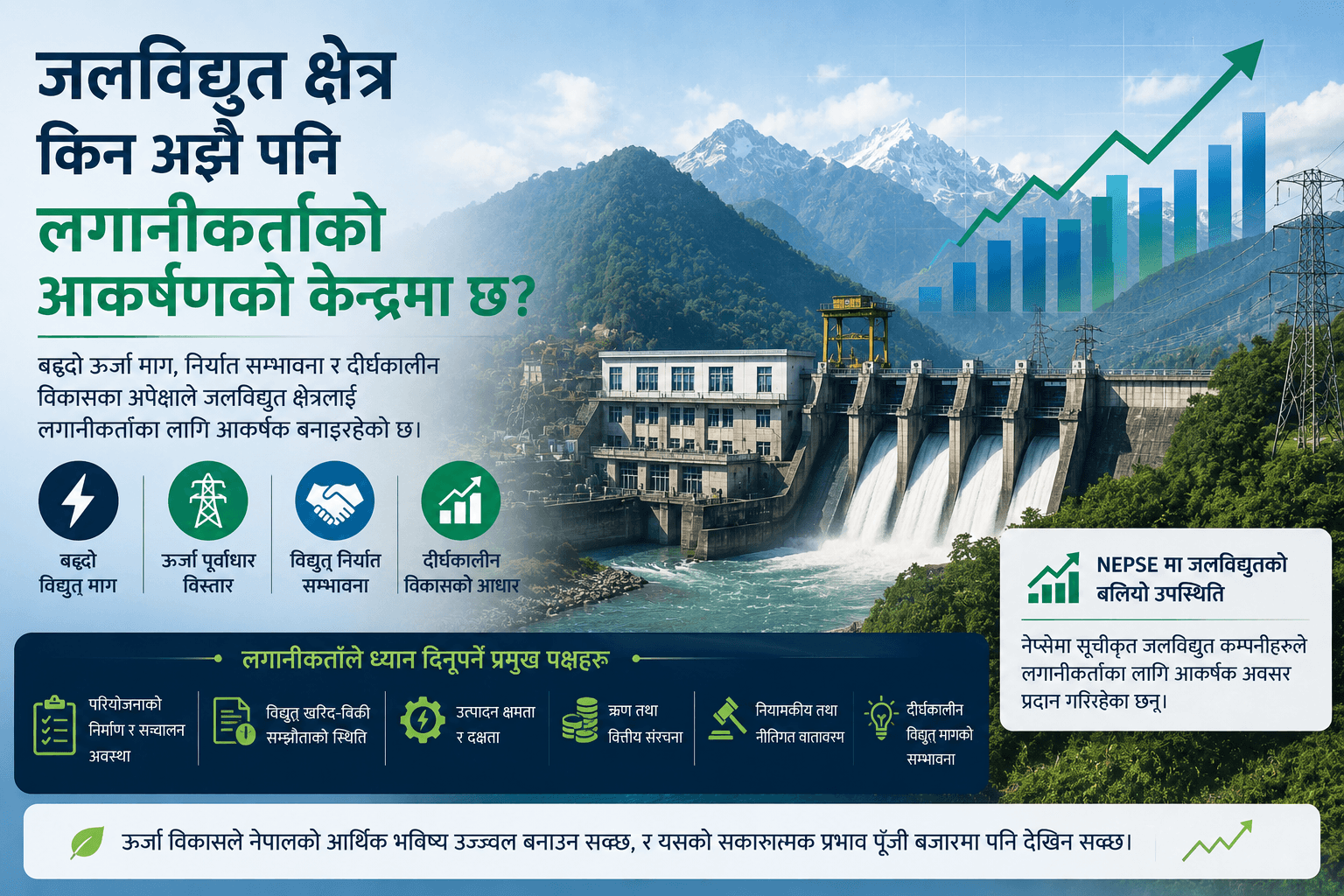
Why Hydropower Continues to Attract Investor Attention
Hydropower is a dominant growth sector on NEPSE, offering retail investors accessible entry into infrastructure assets. Driven by robust domestic demand and cross-border export agreements with India and Bangladesh, the sector holds immense potential. However, long-term returns depend heavily on weather variability, execution timelines, and debt financing structures.
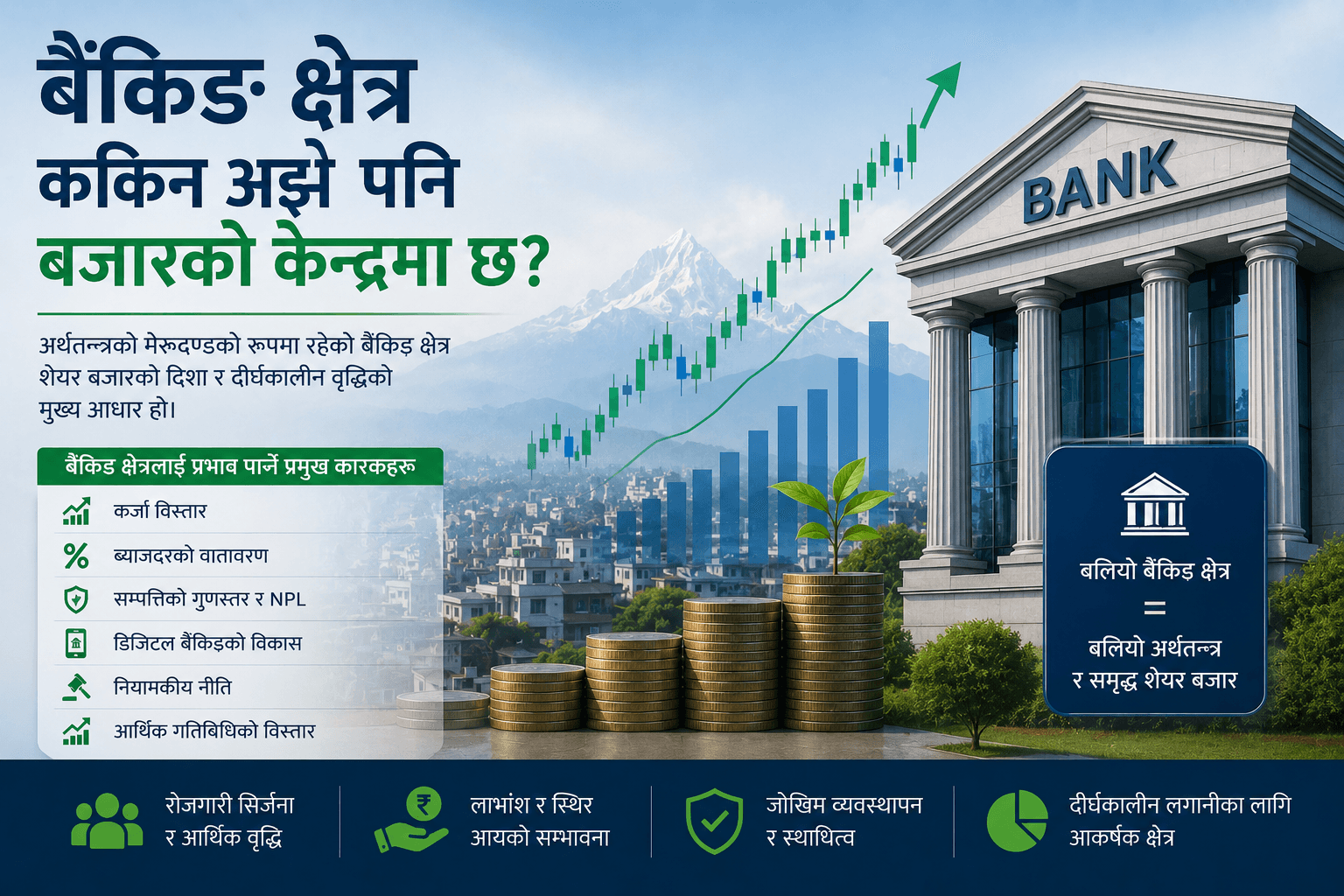
Why Banking Stocks Remain Central to Nepal's Stock Market
Commercial banks, a cornerstone of the Nepal Stock Exchange (NEPSE) with significant market capitalization, play a key role in economic credit delivery. Their performance is highly sensitive to interest rate changes, regulatory updates, and asset quality, making the monitoring of credit growth and non-performing loans essential for investors .
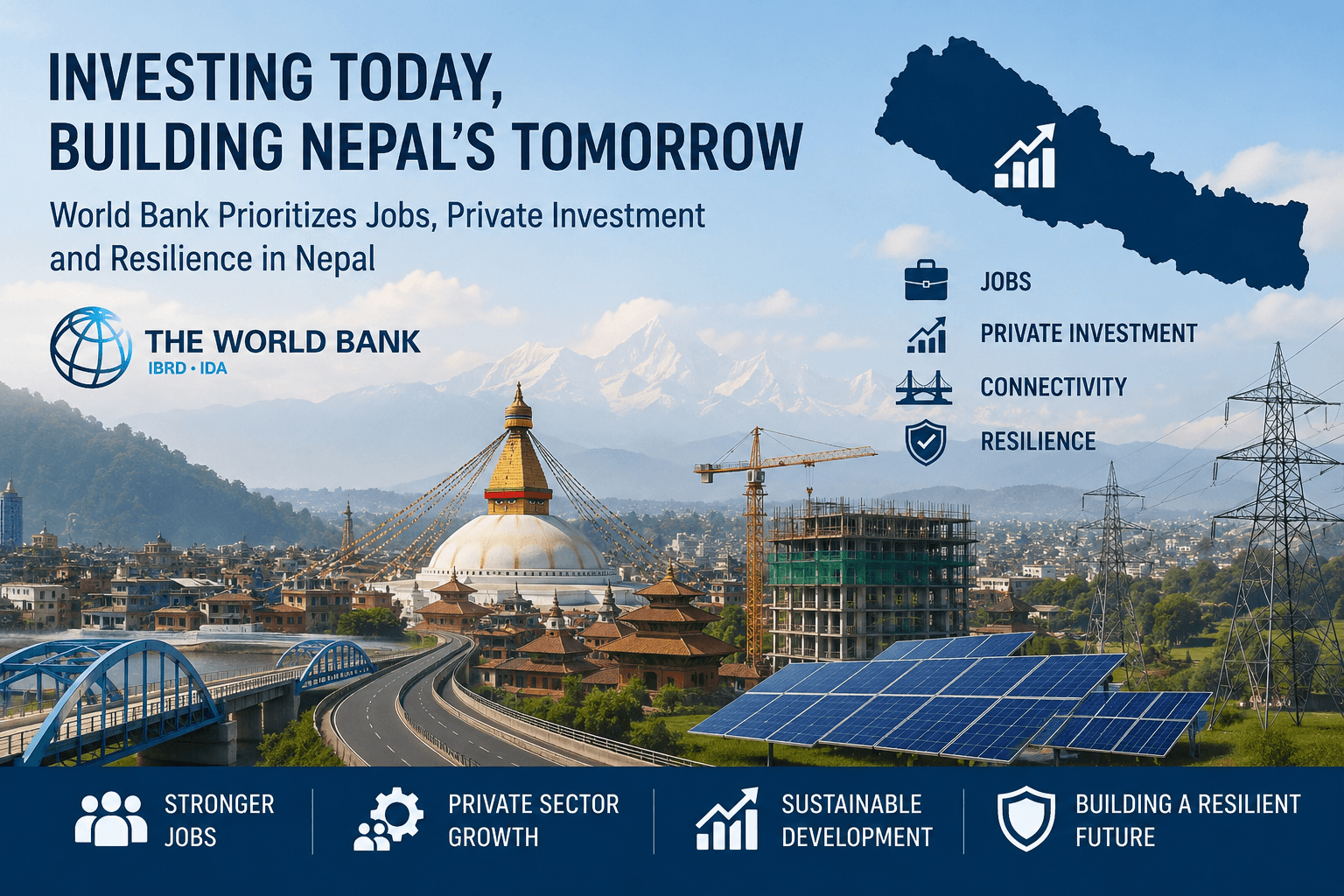
Why the World Bank's Focus on Private Investment Matters for Nepal
The World Bank’s active Country Partnership Framework for Nepal explicitly prioritizes job-creating growth and economic resilience by leveraging private solutions. While Nepal has made significant strides in financial inclusion and retail digital payment ecosystems, bottlenecks in attracting large-scale foreign and domestic private capital persist.To bridge this gap, upcoming policy reforms aim to streamline regulatory frameworks and improve the business climate.